Description
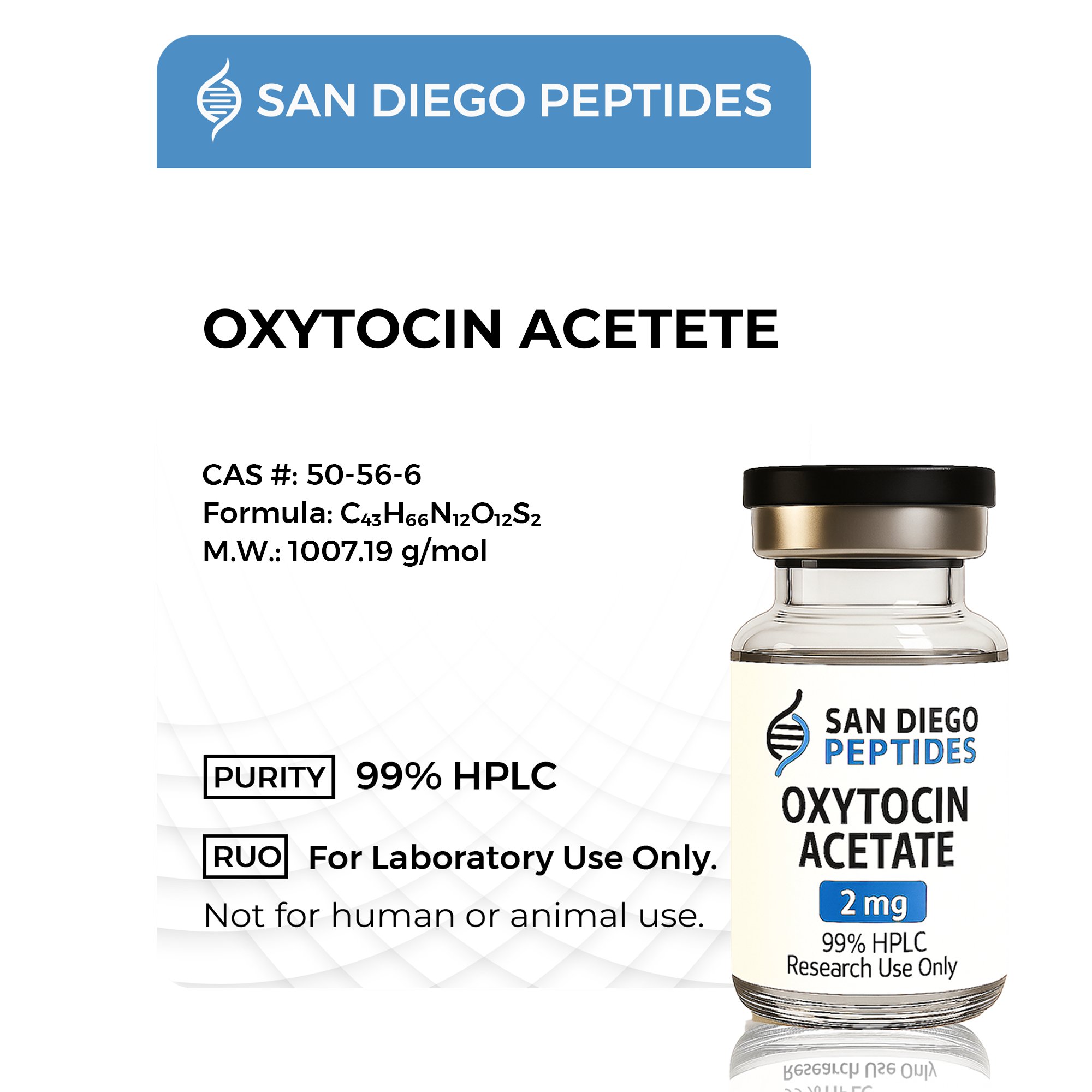
Oxytocin Acetate is a synthetic peptide analog of endogenous oxytocin widely studied in laboratory research focused on neuroendocrine signaling and receptor-mediated pathway activation. It serves as a research tool for examining oxytocin receptor dynamics.
Biochemical Characteristics
Oxytocin is a cyclic nonapeptide containing a disulfide bond between cysteine residues. Its structure enables interaction with oxytocin receptors (OXTR), supporting investigation of GPCR-mediated intracellular signaling and calcium-dependent pathway activation in experimental systems.
Research Applications
Oxytocin Acetate is utilized in research models investigating neuroendocrine signaling, receptor binding kinetics, smooth muscle–associated signaling pathways, and peptide-mediated cellular communication under controlled laboratory conditions.
Pathway / Mechanistic Context
Mechanistic research focuses on OXTR activation and downstream signaling cascades, including phospholipase C activation and intracellular calcium mobilization influencing neuroendocrine regulatory processes.
Preclinical Research Summary
Preclinical investigations have evaluated Oxytocin Acetate in in vitro and experimental models to better understand receptor-mediated signaling dynamics and neuroendocrine pathway modulation.
Form & Analytical Testing
Oxytocin Acetate is supplied as a lyophilized peptide and undergoes analytical verification, including HPLC testing, to confirm identity, purity, and composition consistency for laboratory research use.
RUO Disclaimer
This product is intended strictly for research and laboratory use only. It is not approved for human consumption, medical treatment, veterinary use, cosmetic application, or diagnostic purposes. Handling should be performed only by qualified professionals trained in proper laboratory procedures.

Reviews
There are no reviews yet.