Description
NAD⁺ (nicotinamide adenine dinucleotide) is an essential cellular coenzyme involved in redox metabolism and energy transfer in biological systems. It plays a central role in cellular respiration and metabolic regulation and is widely studied in laboratory research focused on mitochondrial function and cellular energy balance.
Biochemical Characteristics
NAD⁺ functions as an electron carrier by cycling between its oxidized (NAD⁺) and reduced (NADH) forms. This reversible redox activity enables participation in key metabolic reactions, including glycolysis, the citric acid cycle, and oxidative phosphorylation. NAD⁺ also serves as a substrate for enzymes involved in post-translational modification and DNA maintenance.
Research Applications
NAD⁺ is commonly used in biochemical and cellular research examining energy metabolism, redox regulation, and enzymatic activity. It is applied in studies focused on mitochondrial efficiency, metabolic flux, cellular stress responses, and signaling pathways dependent on NAD⁺-consuming enzymes.
Pathway / Mechanistic Context
Mechanistic research involving NAD⁺ explores its role in redox homeostasis, mitochondrial respiration, and regulation of enzymes such as sirtuins and poly(ADP-ribose) polymerases. These pathways are central to studies of cellular adaptation, gene regulation, and stress-response signaling under experimental conditions.
Preclinical Research Summary
Preclinical investigations utilize NAD⁺ in in vitro and experimental model systems to evaluate mitochondrial dynamics, metabolic regulation, and cellular resilience mechanisms. These studies support its continued use as a research tool for understanding energy-dependent cellular processes and redox biology.
Form & Analytical Testing
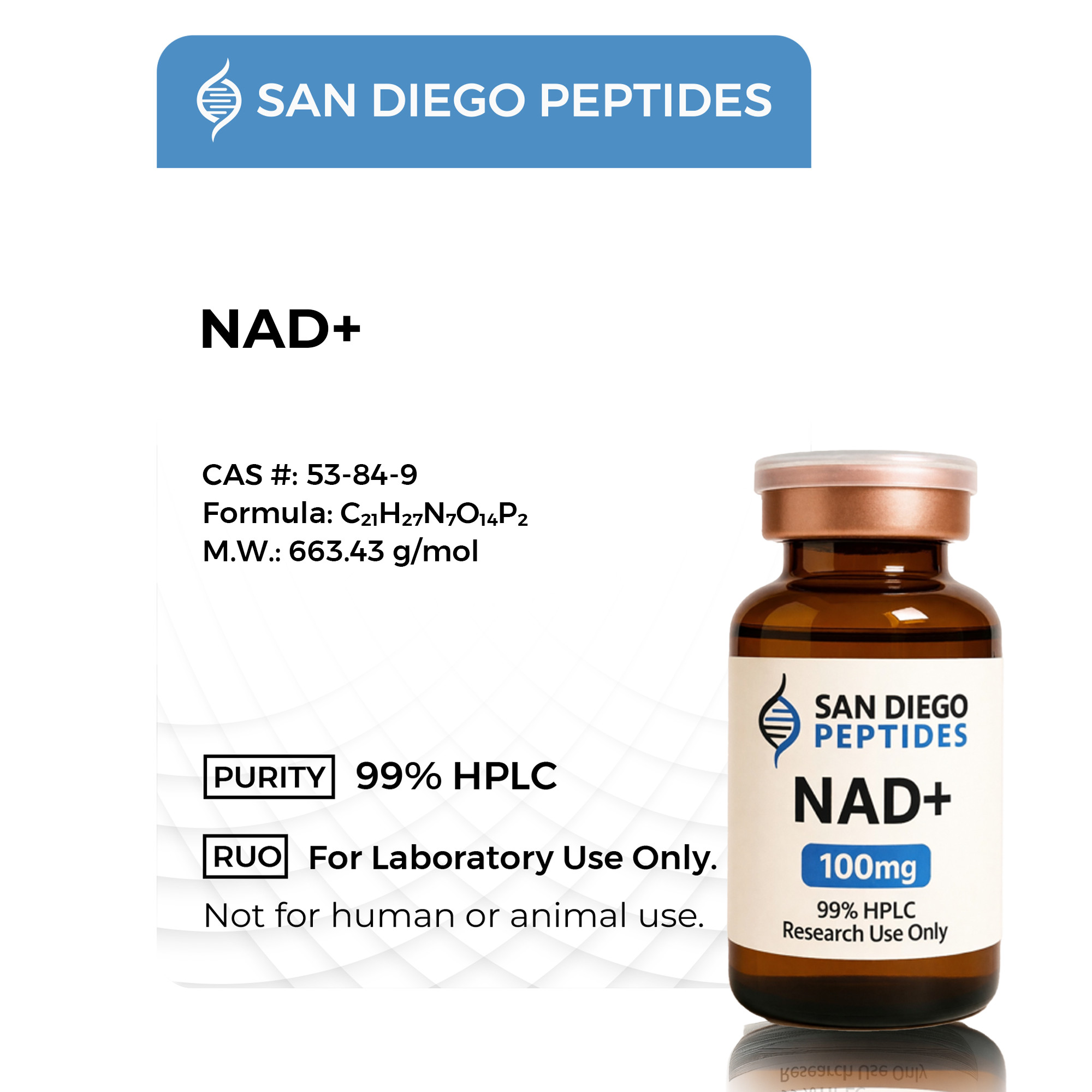
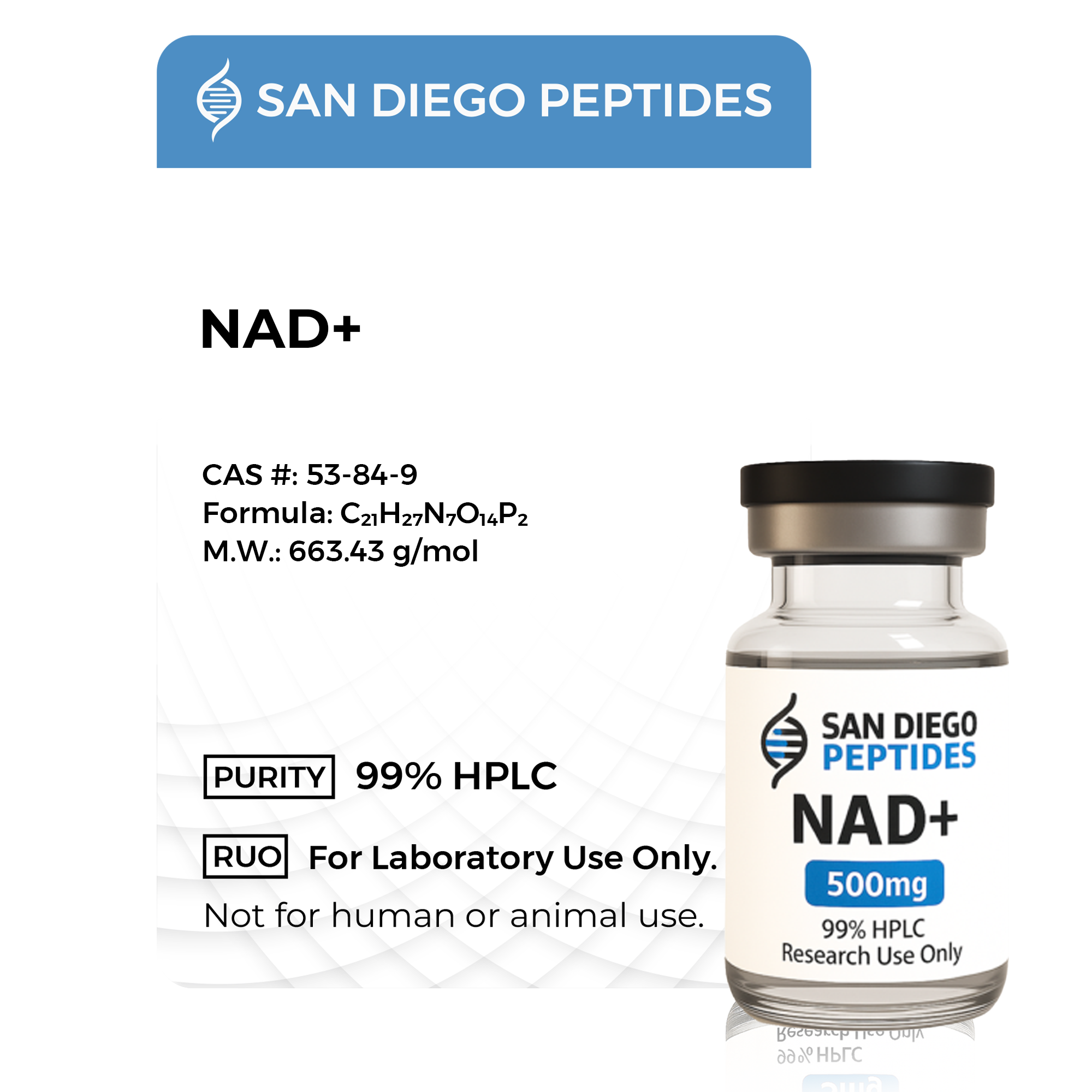
NAD⁺ is supplied in a purified form and undergoes analytical testing, including HPLC, to confirm identity, purity, and consistency. Analytical validation ensures suitability for laboratory research applications requiring precise biochemical characterization.
RUO Disclaimer
This product is intended for research and laboratory use only. It is not approved for human consumption, medical treatment, veterinary use, cosmetic application, or diagnostic purposes. Handling should be performed only by qualified professionals trained in proper laboratory procedures.
Reviews
There are no reviews yet.