Description
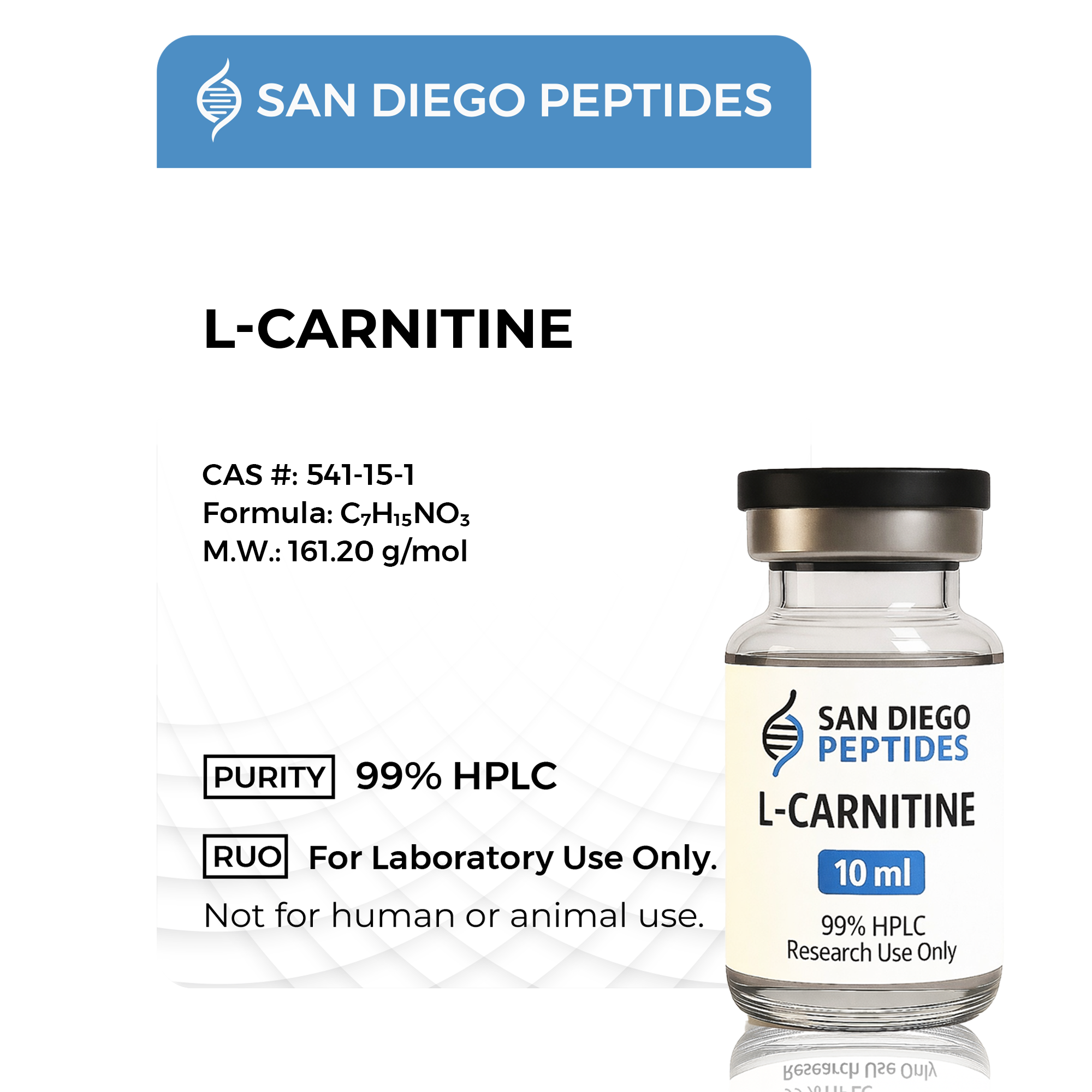
L-Carnitine is a small molecule compound widely studied in laboratory research focused on fatty acid metabolism and mitochondrial energy regulation. It serves as a research tool for examining lipid transport mechanisms and metabolic pathway coordination.
Biochemical Characteristics
L-Carnitine is a trimethylated amino acid derivative that facilitates the transport of long-chain fatty acids across the mitochondrial membrane. Its structure supports experimental evaluation of mitochondrial beta-oxidation and energy production pathways.
Research Applications
L-Carnitine is utilized in research models investigating lipid metabolism, mitochondrial respiration, metabolic flux regulation, and fatty acid oxidation mechanisms under controlled laboratory conditions.
Pathway / Mechanistic Context
Mechanistic research focuses on L-Carnitine–mediated transport of acyl groups into mitochondria via the carnitine shuttle system, influencing beta-oxidation and cellular energy balance pathways.
Preclinical Research Summary
Preclinical investigations have evaluated L-Carnitine in in vitro and experimental models to better understand mitochondrial energy regulation and lipid-associated metabolic processes.
Form & Analytical Testing
L-Carnitine is supplied in purified form and undergoes analytical verification to confirm identity, purity, and composition consistency suitable for laboratory research use.
RUO Disclaimer
This product is intended strictly for research and laboratory use only. It is not approved for human consumption, medical treatment, veterinary use, cosmetic application, or diagnostic purposes. Handling should be performed only by qualified professionals trained in proper laboratory procedures.

Reviews
There are no reviews yet.