Description
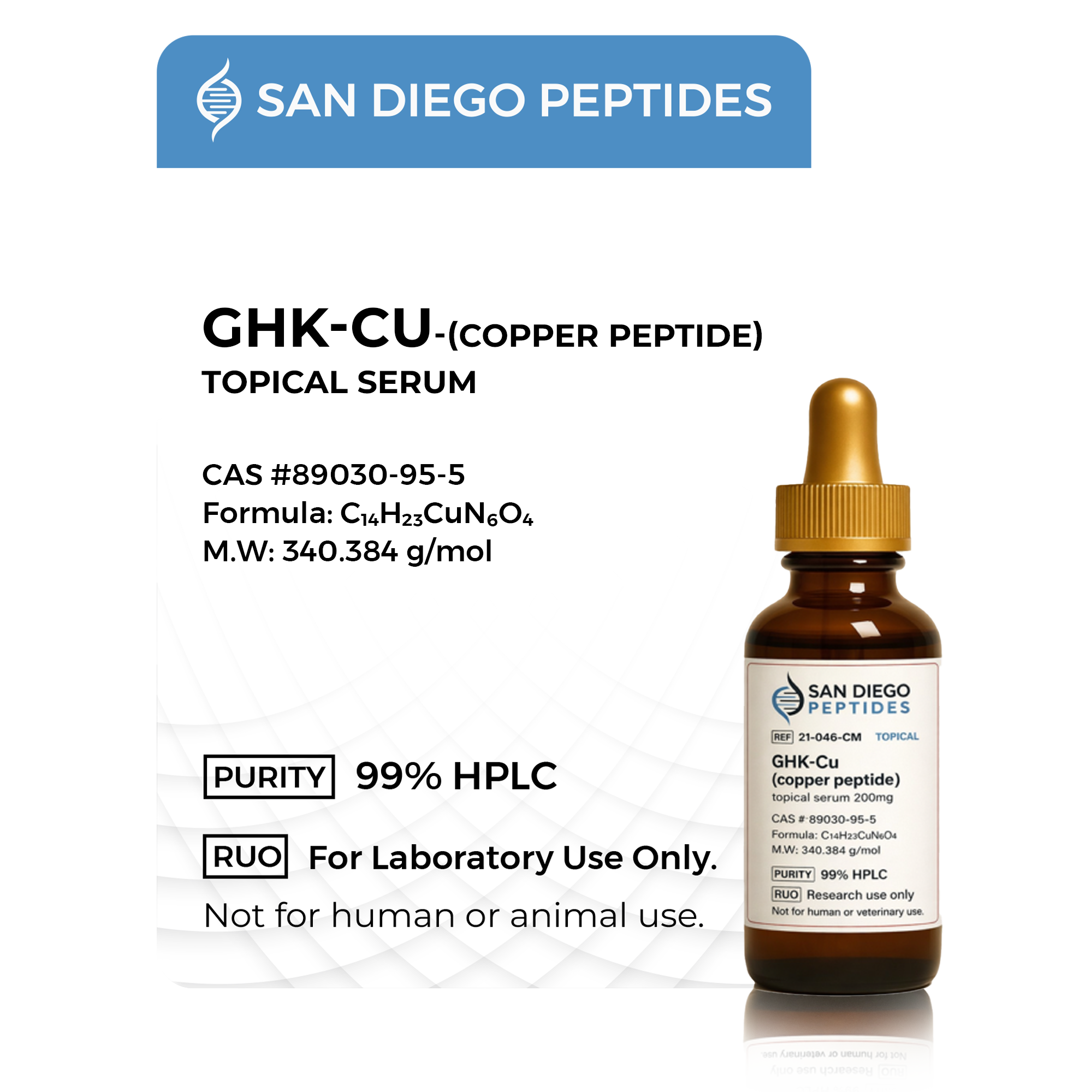
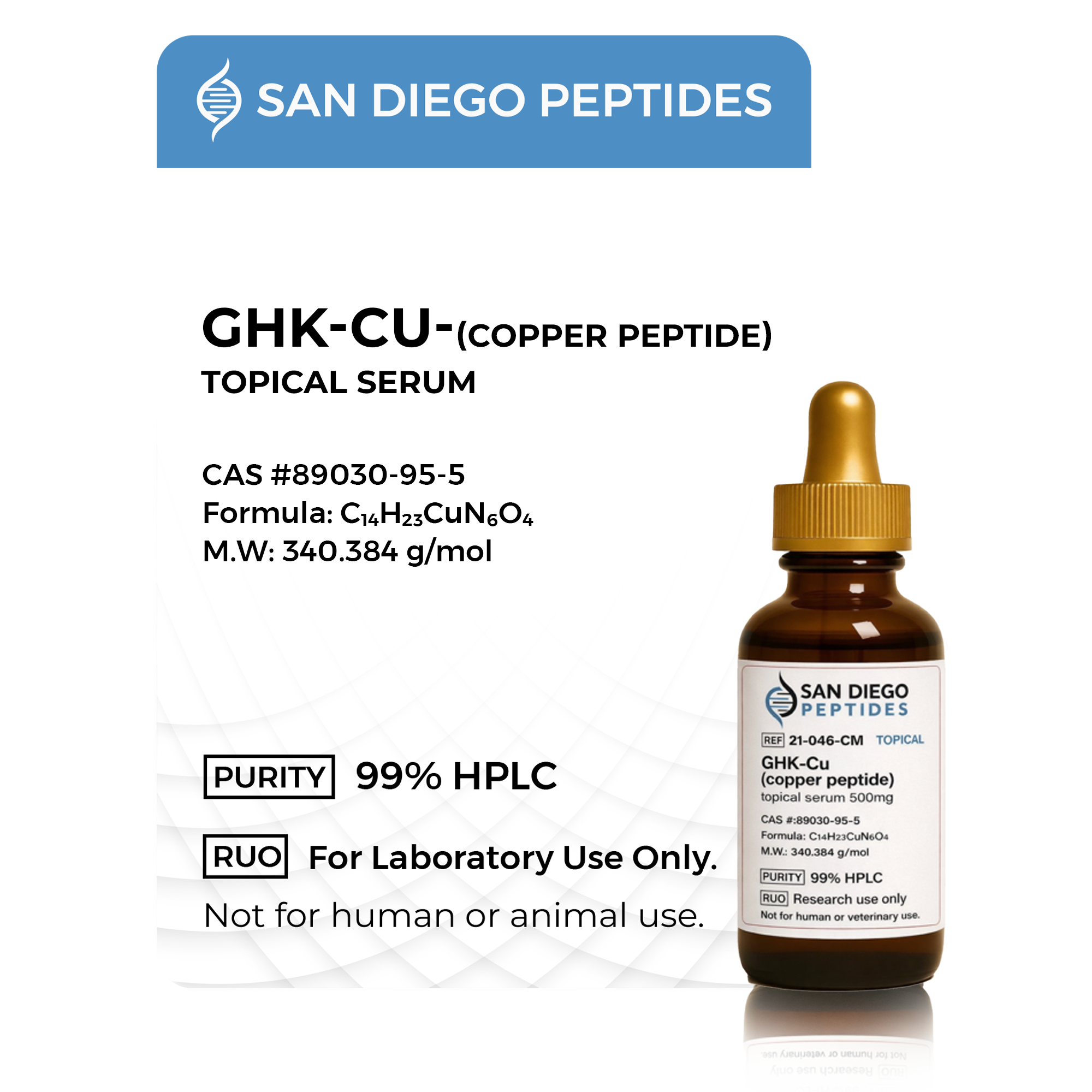
GHK-Cu (copper peptide) is a naturally occurring tripeptide-copper complex composed of glycine, histidine, and lysine bound to a copper (II) ion. It is widely studied in laboratory research for its biochemical properties related to extracellular matrix regulation and cellular signaling. In topical research formulations, GHK-Cu serves as a model compound for investigating peptide-metal interactions and copper-dependent biological processes.
Biochemical Characteristics
GHK-Cu demonstrates a high affinity for copper ions, forming a stable peptide-metal complex under physiological conditions. The tripeptide structure allows interaction with various biomolecules, influencing metalloprotein activity and copper transport dynamics. Research has shown that GHK-Cu can modulate gene expression pathways associated with structural protein synthesis and cellular repair mechanisms, making it a valuable compound for biochemical and molecular studies.
Research Applications
GHK-Cu is commonly utilized in laboratory research focused on peptide chemistry, copper homeostasis, and extracellular matrix dynamics. In topical research models, it is applied to study peptide stability, copper-dependent enzymatic activity, and molecular signaling processes related to tissue structure and regeneration. It is also used in oxidative balance and peptide-metal binding studies.
Pathway / Mechanistic Context
Mechanistic research involving GHK-Cu explores its role in copper-mediated signaling pathways, redox regulation, and transcriptional activity. Studies focus on how copper delivery by peptide carriers influences cellular response pathways, metalloprotein regulation, and extracellular matrix organization at the molecular level.
Preclinical Research Summary
Preclinical investigations have examined GHK-Cu in various in vitro and animal research models to better understand its biochemical behavior and interaction with copper-dependent systems. These studies support its use as a research tool for exploring peptide-driven modulation of cellular signaling and structural protein regulation.
Form & Analytical Testing
GHK-Cu topical formulations are prepared under controlled conditions and tested using analytical techniques such as HPLC to verify purity and composition. Analytical validation ensures consistency, stability, and suitability for research applications requiring precise peptide characterization.
RUO Disclaimer
This product is intended for research and laboratory use only. It is not approved for human consumption, medical treatment, cosmetic application, veterinary use, or diagnostic purposes. All handling should be performed by qualified professionals trained in proper laboratory procedures.

Reviews
There are no reviews yet.